

Openness to experience is a key personality trait that significantly influences how individuals engage with new ideas, challenges, and innovations in the workplace. This trait is characterized by a willingness to explore new experiences, think creatively, and adapt to changing circumstances. While high openness can be a tremendous asset in today’s rapidly evolving work environments, it can also pose certain challenges. Conversely, low openness offers its own strengths and risks, particularly in relation to tradition and adaptability.
Individuals high in openness tend to view change and new technical solutions as exciting opportunities rather than threats. This positive attitude enables them to seek out innovative solutions and navigate the complexities of an ever-changing workplace. High openness fosters creativity, allowing individuals to approach problems with fresh perspectives and generate novel ideas. However, one potential risk of high openness is the tendency to crave constant change, which can lead to restlessness and difficulty settling into a single role or project. Those who score high in this trait may find themselves seeking new challenges and positions frequently, potentially leading to instability in their careers.
On the other hand, low openness often manifests as a preference for tradition, structure, and established systems. Individuals with lower openness may be more comfortable with routine and less inclined to embrace change, valuing stability in their work environments. This can be a significant advantage in roles where consistency and reliability are vital. However, the downside of low openness is the potential for fear or resistance to new technologies and solutions. In organizations that do not foster a supportive and caring environment, individuals with lower openness may feel ashamed or hesitant to ask questions about unfamiliar tools or processes. This reluctance can lead to disengagement and reduced productivity, as these individuals may struggle to adapt to necessary changes in the workplace.
Diversity in openness within a team can enhance the organization’s ability to adapt to change. Those with high openness can drive innovation and exploration of new solutions, while those with low openness can provide stability and adherence to proven systems. Balancing these traits allows organizations to cultivate an environment where both creativity and reliability thrive.
In summary, openness to experience is a critical trait for navigating the complexities of modern work environments. High openness can facilitate the discovery of innovative technical solutions and foster a positive attitude toward change. However, it can also lead to a desire for constant novelty that may impact stability. Conversely, low openness offers strengths in valuing tradition and structure but carries the risk of fear and disengagement in non-supportive settings. By recognizing and valuing the strengths and challenges associated with both high and low openness, organizations can create an environment that encourages growth, engagement, and productivity.
Similar news
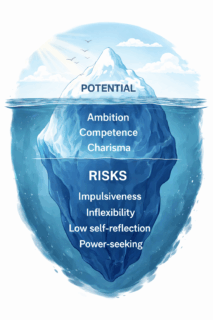
When High Potential Becomes High Risk: Identifying Derailers Early
Hiring a new team member with stellar credentials and apparent high potential is every manager’s dream. But what happens when that high potential quietly turns into high risk? In HR and organizational psychology, derailers describe personality traits or behavioral patterns that can derail one’s career in the wrong direction due to overlooked or overused traits that are overshadowed by high potential; these often surface only after hiring […]

From Traits to Competence: How Tripod Tests Strengthen Evidence-Based Talent Assessment
Modern organisations increasingly recognize that strong performance is driven not only by skills and experience but by competence—the behavioural patterns underlying how people think, interact and solve problems. Personality traits and cognitive abilities shape these behaviours, making psychological assessment a powerful tool for evidence-based HR. What Competence Really Is Competence can be understood through the […]

Self-Presentation for Different Interview Types
In today’s recruitment landscape, candidates often move through several interview formats before receiving an offer. Each format – phone, video or on-site – requires a different approach to communication, environment, and energy. While your skills stay the same, the way you present them must shift to match the setting. Understanding these nuances not only helps […]

What You Need to Know When Planning a Career in IT
In recent years, the pace of IT recruitment has slowed down. The sector has grown, but at a slower rate than before 2023, and the demand for specific specializations has shifted significantly. While there is no shortage of CVs on the job market, companies are increasingly facing not a lack of candidates, but a very […]

Pulse Survey or Organizational Survey – Which One to Choose?
In recent years, more and more companies have shown interest in employee pulse surveys – short, regular surveys designed to understand employees’ everyday experiences and attitudes. These surveys have become trendy and seemingly easy to implement. But behind this speed and convenience lies a critical question: Do pulse surveys really deliver what we expect from them? […]

Why Do We Sometimes Fail to See the Obvious? Confirmation Bias in HR Practice
Since I began working in consulting, I’ve repeatedly encountered a recurring pattern. When meeting with potential clients, I often hear things like: “I’ve been working in HR for over 10 or 20 years – I know what I’m doing. What exactly could you offer me?” Or: “I’ve taken hundreds of different tests – what could […]

From AI Adoption to AI Adaptation: The Skill Employers Are Already Hiring For in 2025
Two years ago, adding “proficient in ChatGPT” to your CV made you look innovative. Today, it’s the new “Microsoft Word.” Everyone’s using AI — what matters now is how you’re using it. In 2025, the conversation has shifted from AI adoption to AI adaptation. This isn’t about learning the tools — it’s about changing how […]
Why Hiring Salespeople Is Hard — And How We Help Companies Get It Right
At Tripod Link, we specialize in hiring top-performing salespeople — from Business Development Managers to Account Executives — because we know how hard sales recruitment really is. Whether it’s a Business Development Manager, Account Executive, or Sales Manager, the message is the same: “We need someone who can drive results — and fast.” We get […]