

From a psychologist’s perspective, agreeableness is a fascinating trait with significant implications for teamwork, conflict resolution, and interpersonal dynamics. It’s important to emphasize that no personality trait is inherently bad; rather, some may be more suitable for certain positions than others.
Teamwork is increasingly critical in today’s collaborative environments, where synergy among team members drives innovation and productivity. Research shows that effective teamwork correlates with higher job satisfaction, lower turnover rates, and improved company performance. Employees who excel in team settings often report a greater sense of belonging and fulfillment, which can enhance their motivation and engagement.
Agreeableness is a key personality trait that fosters collaboration. Individuals high in agreeableness tend to be cooperative, empathetic, and open to feedback, making them essential for constructive team dynamics. However, high agreeableness can also present challenges. Agreeable individuals may struggle to set boundaries and say “no,” often taking on extra tasks to help colleagues, which can lead to burnout or missed deadlines. Agreeable managers might avoid unpopular decisions to maintain positive relationships, making it difficult to address performance issues or focus on long-term goals.
Low agreeableness can offer valuable strengths in certain roles, especially those that require a more critical, straightforward approach. People with lower agreeableness tend to be more direct, assertive, and comfortable challenging ideas, which can drive innovation and prevent groupthink in team settings. Their tendency to question norms or play the “devil’s advocate” role can be essential in situations where critical evaluation and tough decision-making are needed.
In management or leadership, low agreeableness can be a plus when difficult decisions must be made. Leaders with lower agreeableness are often more willing to set clear boundaries, hold others accountable, and focus on the goals and needs of the organization, even if it means making choices that might not be immediately popular.
Diversity in agreeableness is essential within a team. Individuals with lower agreeableness may not always account for colleagues’ personal situations, and their feedback can come across as direct or even blunt. However, this clarity is often invaluable, as their feedback lacks an emotional filter, making it straightforward and actionable. In contrast, team members with higher agreeableness might hesitate to give constructive criticism for fear of hurting others’ feelings, prioritizing positive relationships over direct feedback. Those with lower agreeableness are also more willing to engage in tough conversations and voice their opinions, which can be beneficial when advocating for the team’s needs or rights. By embracing this balance, teams can create a dynamic where honest feedback and supportive relationships coexist.
In summary, agreeableness plays a crucial role in teamwork and interpersonal dynamics, influencing how team members collaborate and communicate. While high agreeableness fosters cooperation and empathy, it can also lead to challenges like difficulty setting boundaries and avoiding tough decisions. Conversely, low agreeableness brings strengths in direct communication and critical thinking, which can drive innovation and accountability. A diverse range of agreeableness within teams can enhance collaboration, ensuring that both supportive relationships and honest feedback thrive.
Similar news
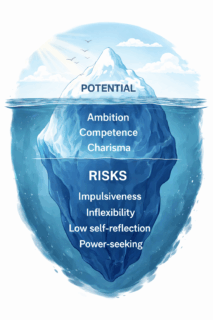
When High Potential Becomes High Risk: Identifying Derailers Early
Hiring a new team member with stellar credentials and apparent high potential is every manager’s dream. But what happens when that high potential quietly turns into high risk? In HR and organizational psychology, derailers describe personality traits or behavioral patterns that can derail one’s career in the wrong direction due to overlooked or overused traits that are overshadowed by high potential; these often surface only after hiring […]

From Traits to Competence: How Tripod Tests Strengthen Evidence-Based Talent Assessment
Modern organisations increasingly recognize that strong performance is driven not only by skills and experience but by competence—the behavioural patterns underlying how people think, interact and solve problems. Personality traits and cognitive abilities shape these behaviours, making psychological assessment a powerful tool for evidence-based HR. What Competence Really Is Competence can be understood through the […]

Self-Presentation for Different Interview Types
In today’s recruitment landscape, candidates often move through several interview formats before receiving an offer. Each format – phone, video or on-site – requires a different approach to communication, environment, and energy. While your skills stay the same, the way you present them must shift to match the setting. Understanding these nuances not only helps […]

What You Need to Know When Planning a Career in IT
In recent years, the pace of IT recruitment has slowed down. The sector has grown, but at a slower rate than before 2023, and the demand for specific specializations has shifted significantly. While there is no shortage of CVs on the job market, companies are increasingly facing not a lack of candidates, but a very […]

Pulse Survey or Organizational Survey – Which One to Choose?
In recent years, more and more companies have shown interest in employee pulse surveys – short, regular surveys designed to understand employees’ everyday experiences and attitudes. These surveys have become trendy and seemingly easy to implement. But behind this speed and convenience lies a critical question: Do pulse surveys really deliver what we expect from them? […]

Why Do We Sometimes Fail to See the Obvious? Confirmation Bias in HR Practice
Since I began working in consulting, I’ve repeatedly encountered a recurring pattern. When meeting with potential clients, I often hear things like: “I’ve been working in HR for over 10 or 20 years – I know what I’m doing. What exactly could you offer me?” Or: “I’ve taken hundreds of different tests – what could […]

From AI Adoption to AI Adaptation: The Skill Employers Are Already Hiring For in 2025
Two years ago, adding “proficient in ChatGPT” to your CV made you look innovative. Today, it’s the new “Microsoft Word.” Everyone’s using AI — what matters now is how you’re using it. In 2025, the conversation has shifted from AI adoption to AI adaptation. This isn’t about learning the tools — it’s about changing how […]
Why Hiring Salespeople Is Hard — And How We Help Companies Get It Right
At Tripod Link, we specialize in hiring top-performing salespeople — from Business Development Managers to Account Executives — because we know how hard sales recruitment really is. Whether it’s a Business Development Manager, Account Executive, or Sales Manager, the message is the same: “We need someone who can drive results — and fast.” We get […]